
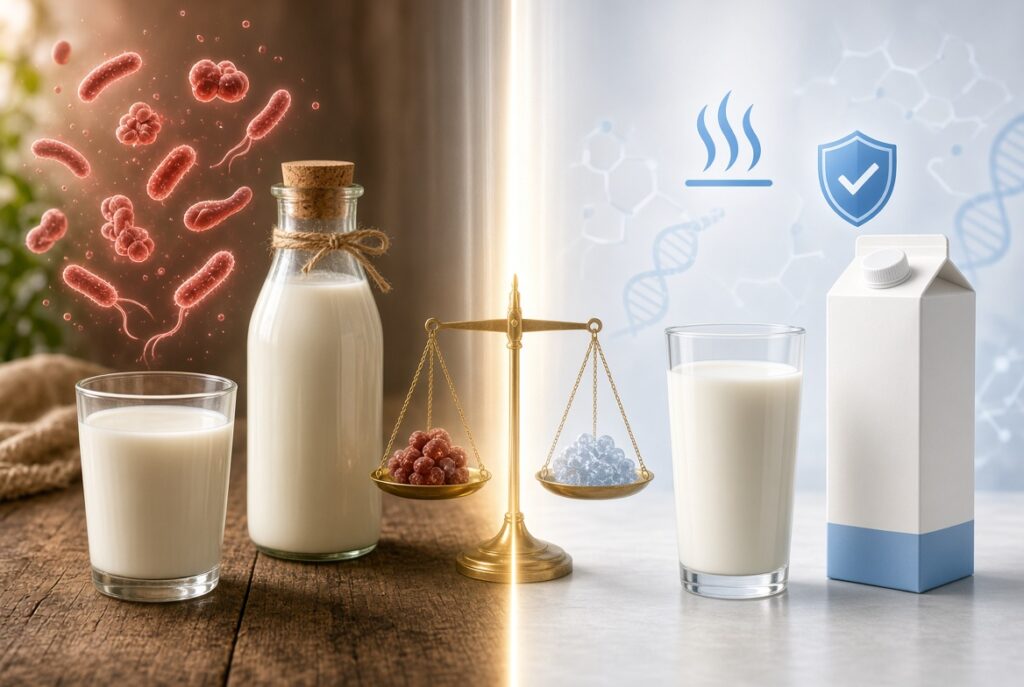
Raw Milk vs Pasteurized Dairy: I’ve lost count of how many times someone at a farmers market or on a podcast has told me raw milk is “nature’s perfect food.” The pitch is always the same: more enzymes, better nutrients, healthier gut. Then another outbreak notice drops, and I’m back to the same conversation over coffee.
Raw Milk vs Pasteurized Dairy
Here’s the short version. Raw milk can carry Campylobacter, Salmonella, E. coli, and Listeria. Pasteurization is still one of the strongest public-health tools we have for dairy safety. The nutrition claims just don’t cancel out the documented outbreak risk—especially for kids, older adults, and anyone with a weaker immune system.
What Actually Lives in Unpasteurized Milk
Milk leaves a healthy cow sterile. Contamination happens on the farm: manure, dirt, equipment, even a cow that looks fine but sheds bacteria. Once those pathogens get in, they can multiply in the fridge.
The usual suspects keep showing up:
- Campylobacter (bloody diarrhea, fever, sometimes Guillain-Barré)
- Salmonella
- Shiga-toxin E. coli (the kind that can trigger kidney failure)
- Listeria (especially dangerous in pregnancy)
In the first half of 2026 alone, more than 80 people got sick from raw dairy in the U.S. Idaho saw nearly 60 Campylobacter cases tied to two dairies. Louisiana reported a cluster with Campylobacter and Cryptosporidium. And the Raw Farm E. coli outbreak linked to raw cheddar and milk hit nine people across three states—half of them kids under five. Three were hospitalized; one developed hemolytic uremic syndrome.
Testing the milk doesn’t catch everything. Low levels of bacteria can still make people sick, and outbreaks keep happening even at dairies that test regularly.
How Pasteurization Actually Works
Pasteurization is simple heat: high enough and long enough to kill the dangerous bugs without turning the milk into something unrecognizable. It doesn’t sterilize the milk completely, but it knocks the pathogen risk down dramatically.
Before widespread pasteurization, milkborne illnesses were a major killer—especially of babies. Today the commercial pasteurized milk supply is one of the safest foods we have. When outbreaks do happen with pasteurized products, they’re rare and usually tied to post-processing contamination, not the milk itself.
Raw milk, by contrast, accounts for a tiny share of dairy consumption yet drives the vast majority of milk-related illnesses. Older CDC analyses put the risk hundreds of times higher per serving. That pattern hasn’t changed.
Raw Milk vs Pasteurized Dairy: The Nutrition Argument Doesn’t Hold Up
I get why the “raw is better” claim feels intuitive. Heat can reduce some heat-sensitive vitamins a little. Studies show minor drops in certain B vitamins and vitamin C. But milk was never a major source of those vitamins to begin with. Protein, calcium, fat, and most other nutrients stay essentially the same.
Claims that raw milk cures lactose intolerance, prevents allergies, or delivers special probiotics haven’t held up in controlled research. The “beneficial bacteria” story ignores that the same milk can also deliver the pathogens listed above. Any theoretical upside is small; the downside is measurable and sometimes severe.
Who Pays the Highest Price
Kids under five keep showing up in the outbreak data. Their immune systems and developing kidneys make E. coli especially dangerous. Pregnant people face Listeria risks that can harm the baby. Older adults and anyone immunocompromised also sit in the higher-risk group.
Even healthy adults aren’t immune. Campylobacter can leave people dealing with reactive arthritis or neurological complications long after the diarrhea ends. The Idaho 2026 cases included hospitalizations across a wide age range.
Real-World Trade-Offs in 2026
Interest in raw milk has grown with the broader “unprocessed food” wave. Some states have expanded legal sales even while active outbreaks were underway. That doesn’t change the biology. Every time a new cluster appears, public-health agencies end up repeating the same advice: choose pasteurized dairy if you want the nutrition without the pathogen gamble.
You can still support small farms and high-quality dairy. Plenty of excellent pasteurized milk, yogurt, and cheese comes from farms that treat animals well and prioritize freshness. The heat step is not the enemy of quality; it’s the reason most of us can drink milk without a second thought.
The Takeaway
Pasteurization remains one of the cleanest public-health wins of the last century. Raw milk carries well-documented pathogen risk. The nutrition differences are minor. For most people—and especially for vulnerable groups—the safer glass is the pasteurized one.
If you’ve tried both and still prefer the taste of raw, or if you’ve been following the recent outbreaks, drop your thoughts in the comments. I’m curious what people are seeing on the ground.